
Case study
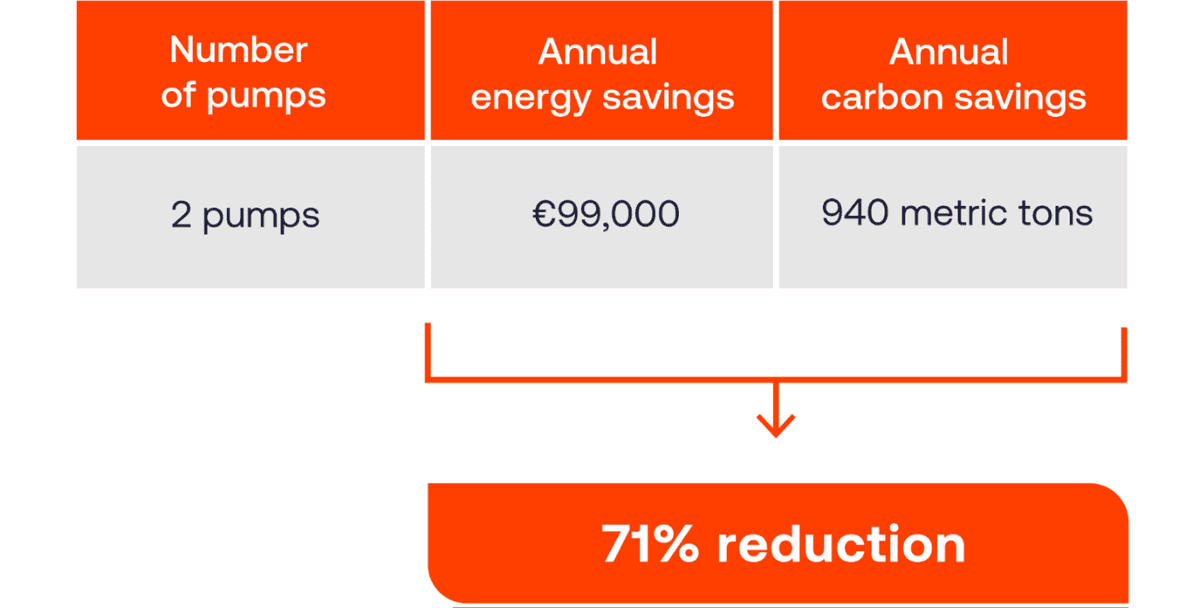
Hydraulically rerating an existing booster pump station to reduce energy cost by €99k a year
SAM4 Energy advised to hydraulically rerate one of the two identical booster pumps operating in the same process. This would ensure backup functionality and prevent downtime during rerating. The investment pays for itself in less than 7 months.
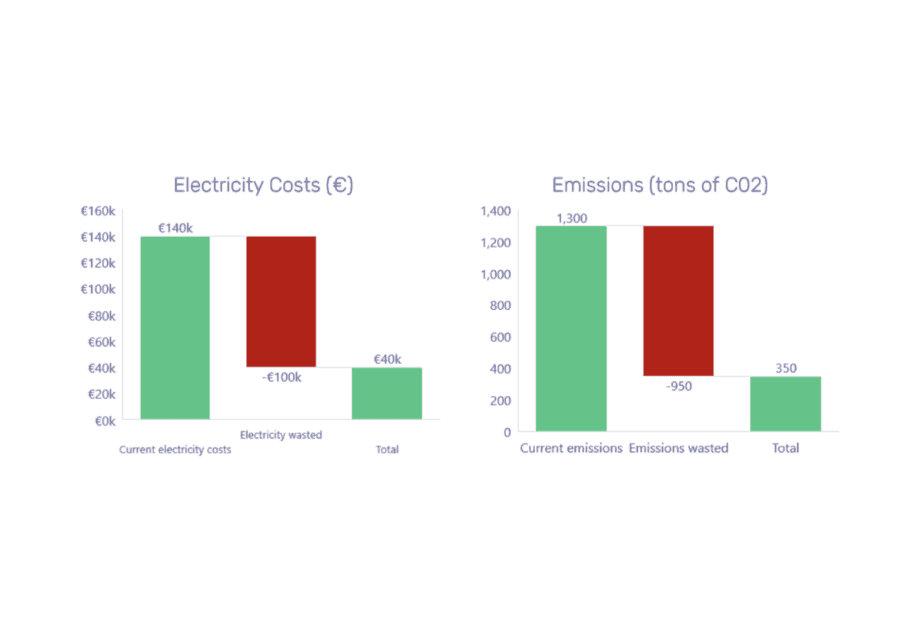
Rerating one pump triples performance
- Two identical booster pumps operated at a significantly lower flow, resulting in a drop in efficiency from 69% to 23%.
- The recommended solution was to hydraulically rerate one pump to improve efficiency and run it 90% of the time.
- Rerating only one pump would save costs, pay for itself in less than 7 months, and provide backup during rerating and for higher-flow requirements.
Pump operation far from best efficiency point revealed by data
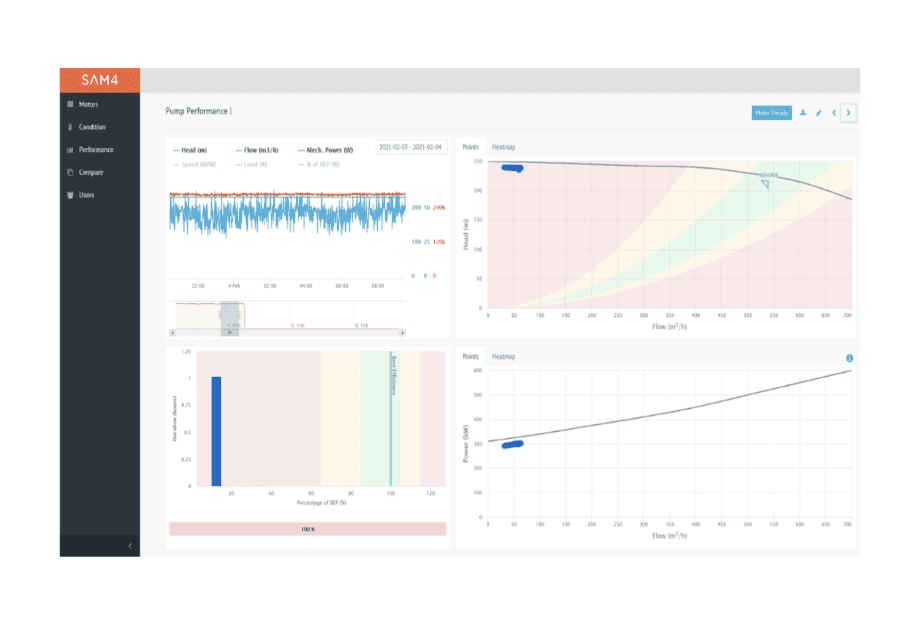
SAM4's real-time pump curve and operating data for the first pump, showing operation far to the left of the best efficiency point (top right). Data for the second pump were similar.
Problem
Two identical booster pumps in the same process operated sequentially as an A/B pair. The pumps were designed for a duty point of 540 m3/h at a head of 217 m. Using its real-time pump performance curve and operational data, SAM4 Energy identified that the two pumps actually operated at a significantly lower flow, near 100 m3/h. As a result, the pumps' efficiency had dropped from the rated maximum of 69% to only 23%.
Solution
Our Energy team investigated three potential courses of action. Our recommended solution was to hydraulically rerate one of the two pumps so that its best efficiency point was nearer to 100 m3/h. By running this improved pump 90 percent of the time (instead of alternating the two pumps), the pump owner would nearly triple the station's efficiency.
In making this recommendation, our Energy team considered the following practicalities:
- Rerating both pumps would save slightly more each year, but take twice as long to pay for itself.
- Buying new pumps instead of rerating would cost more for no additional benefit.
- By rerating only one pump, the second pump would be there to handle any higher-flow requirements if they should occur, and to operate while the first pump was being rerated, to prevent downtime.
- Six months of operational data showed that using the improved pump for 90% of the flow would be roughly 500 hours per month, which was feasible.
At a cost of roughly €50k, the rerate would pay for itself in less than 7 months.
Impact
See what SAM4 can detect on your assets
Related case studies
Improving submersible pump efficiency at Sabesp
SAM4 measured how far the submersible pumps had drifted from their design efficiency, showing the operator where energy was being lost.
Yorkshire Water clears two blocked sewage pumps
When a second pump began to block, Yorkshire Water sent a team to clear both pumps. The client verified €190,000 in estimated avoided costs.
Early alerts on a degrading oxidation ditch rotor prevent two pollution events and up to €900k in costs
Twice, SAM4 Health provided early warning of gearbox degradation though the vibration system had not yet alerted the customer to a problem.
Preventing downtime on borehole pumps
Borehole pumps sit far underground, out of reach of vibration sensors. SAM4 reads their condition from the motor control cabinet at the surface.