
Airports
Airport motor and drive monitoring
Monitor motors and drives in baggage handling, HVAC, escalators and cargo systems. SAM4 measures current and voltage at the motor control cabinet, providing fault information between inspections and maintenance windows.
Deployed at


Where airport equipment monitoring breaks down
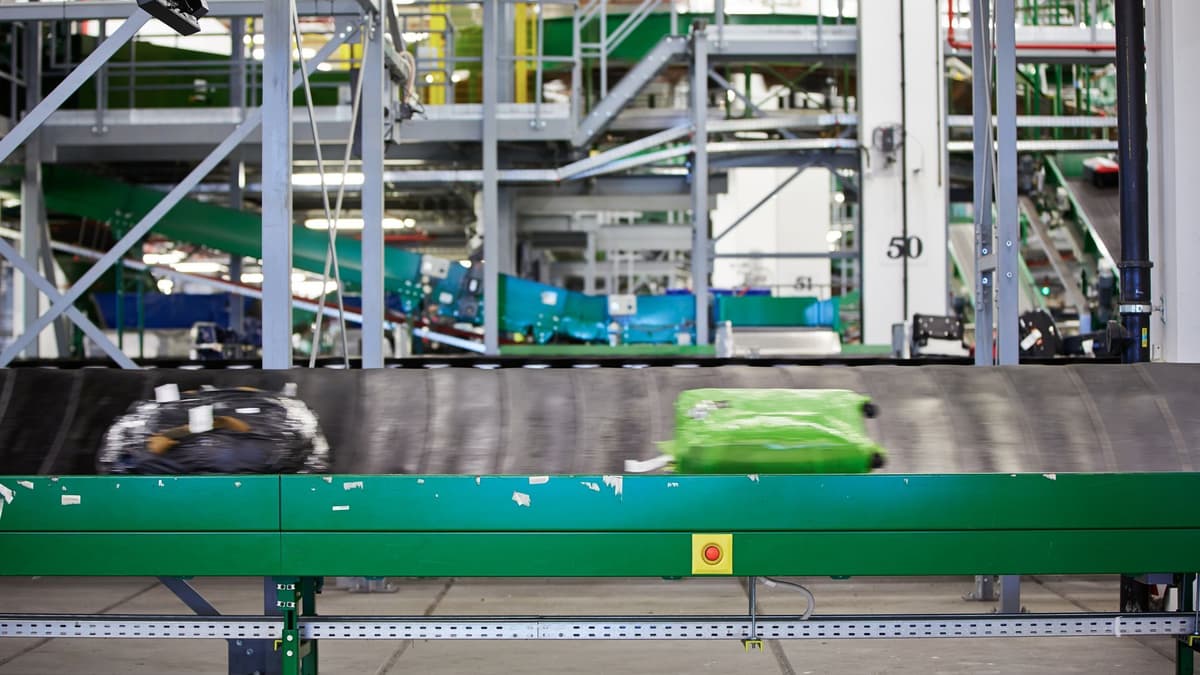
Baggage handling systems run 16-20 hours a day. Maintenance gets a 4-6 hour window overnight. Most motor failures are bearing-related. SCADA catches the conveyor that stopped. It rarely gives maintenance teams early evidence of bearing wear, belt slip, gearbox degradation, or insulation problems developing over weeks.
What airports face every day
Compressed maintenance windows
4-6 hours overnight, between last departure wave and first morning check-in. Emergency repairs during operations cost 3-5x more than planned work.
Distributed motor fleet
Hundreds of motors across terminals, levels, and remote plant rooms. Route-based inspection means travel dominates the maintenance day.
Passenger-facing consequences
Even short BHS interruptions can create a backlog that lasts longer than the outage itself, especially during transfer peaks. Disrupted bags affect passenger satisfaction scores and operational recovery time.
Regulatory pressure
New ground-handling and energy-efficiency rules increase pressure to document preventive maintenance, fault handling, and energy performance. SAM4 supports that evidence trail with continuous condition and motor-energy data.
Gaps in airport equipment monitoring
SCADA sees failures, not degradation
Vanderlande, BEUMER, and Alstef SCADA catches conveyor stopped, motor overheating, overload trip. It rarely gives early evidence of bearing wear, gearbox degradation, or belt slippage developing over weeks.
Vibration monitoring is impractical at scale
Motor sizes (0.55-5.6 kW) make per-asset vibration sensors uneconomic for hundreds of conveyor drives. Airport ambient vibration makes baseline establishment harder than in a purpose-built plant.
The gap
51-67% of motor failures are bearing-related. SCADA misses nearly all of them in early stages. Route-based vibration covers a fraction of the fleet, monthly at best. The early signal of a developing fault is invisible to today's monitoring.
Operating constraints push everything to overnight. Current monitoring only catches what has already failed. The early signal, weeks before failure, is where airport reliability is won or lost.
Airport assets SAM4 monitors
SAM4 monitors any AC motor-driven asset from the electrical panel. These are the asset types most relevant to airport operations.



Airport deployments and detected faults

How Schiphol Airport improved the reliability of its baggage handling lines
Nine conveyor faults, nine caught before failure: imbalance, belt degradation and bearing wear across the baggage handling lines.

Improving baggage handling reliability at London Stansted
Baggage conveyors can only be maintained overnight. SAM4 monitors the drives continuously so faults surface in time for that window.
Airport equipment to assess first
SAM4 fits motor-driven rotating equipment monitored from the MCC or drive: pumps, conveyors, fans, and blowers. In airports, that means baggage handling first, then pumps, then central plant. At Schiphol, SAM4 caught 9 out of 9 conveyor-belt faults across imbalance, belt degradation, and bearing wear.
Typical rotating assets
Conveyor drives, sorters, diverters, make-up belts, reclaim belts, transfer drives, vertical lifts.
Why it fits
Numerous, motor-driven, operationally critical, and proven in an airport setting. At Schiphol, SAM4 caught 9 out of 9 conveyor-belt faults including imbalance, belt degradation, and bearing wear, avoiding more than five hours of baggage downtime.
Caveat
Don't monitor every small belt. Start with critical drives, transfer points, sorters, and make-up/reclaim lines.
Typical rotating assets
Transfer pumps, hydrant loop pumps, boosters, filter and separator pumps.
Why it fits
Motor-driven, high-consequence, and central to aircraft turnaround. Hydrant systems move fuel from storage through underground networks to gates. Pump availability affects gate use and airline schedules.
Caveat
Fewer assets than BHS. Stakeholder complexity is higher: fuel operations may sit with a consortium or specialist operator.
Typical rotating assets
Stormwater pumps, runway and taxiway drainage pumps, sump pumps, sewage lift pumps, glycol recovery pumps.
Why it fits
Often hidden, wet, remote, or hard to inspect. MCC-based monitoring fits exactly where mounted sensors are uneconomic. Failure creates flooding, sanitation issues, or airside disruption.
Caveat
Duty cycles vary. Some stormwater pumps run rarely, so the strategy must use test runs or focus on pumps with regular runtime.
Typical rotating assets
Chilled-water pumps, condenser-water pumps, AHU fans, exhaust fans, cooling tower fans.
Why it fits
SAM4's natural fit. Two budget logics: energy waste and reliability. Airports have heavy HVAC needs for passenger comfort, air quality, and fire-related operation.
Caveat
Individual asset criticality is diluted by redundancy. Pitch fleet-level: energy waste, prioritisation, and central plant reliability.
Typical rotating assets
Cargo handling drives, sorters, ULD movement systems.
Why it fits
Technically similar to BHS. At cargo hubs this can be as strong as BHS because conveyor uptime maps directly to handling capacity.
Caveat
Only compelling at cargo-heavy airports or logistics facilities. For passenger airports, BHS usually wins first.
Typical rotating assets
Fire-water pumps, foam pumps, jockey pumps, smoke-extraction fans, pressurization fans.
Why it fits
Safety-critical and must remain available under high reliability requirements. SAM4 detects pump and fan degradation across the same asset types.
Caveat
Fire pumps are often standby. Sparse runtime weakens continuous-learning value unless test-run monitoring is part of the operating model.
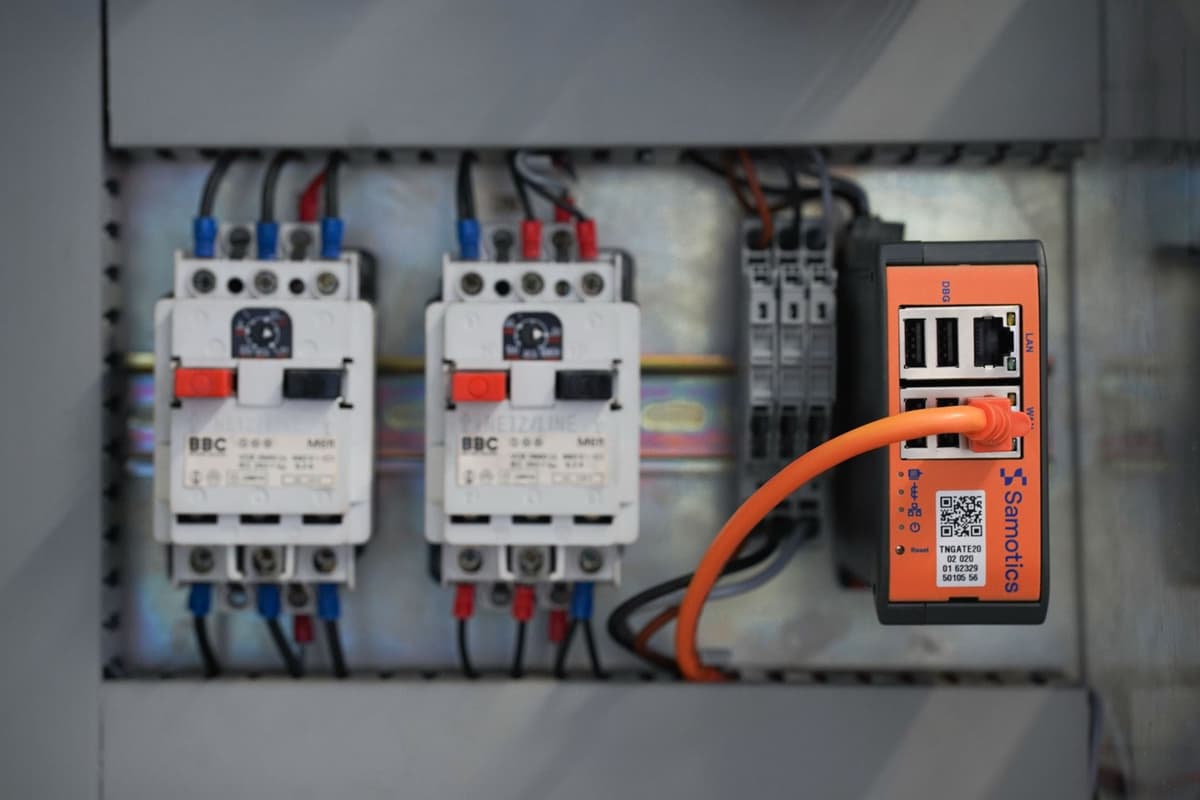
Installation: clip on at the MCC.
Motor control cabinets sit in staff-only electrical rooms. Not in passenger areas. Not on the BHS floor. Brief MCC outage to install; all hardware at the cabinet.
Clip on at the MCC
Current and voltage sensors clip onto existing motor supply cables. No wiring changes. Installation usually requires a short planned cabinet intervention.
Connect via airport network or cellular
SAM4 connects via the airport's existing fibre or WiFi backbone, or its own 4G/LTE cellular gateway. No dependency on BHS SCADA or BMS. Runs on an isolated network segment. Read-only. ISO 27001 certified.
Monitor from anywhere
Authorised users can access the SAM4 dashboard from approved devices and locations. Pilot 20-30 priority motors in the first week. Broader rollout in 4-6 weeks. First diagnostic results typically appear within 48 hours, with diagnostic confidence building as SAM4 observes runtime, load changes, and normal operating behaviour.
“Because SAM4 installs inside the motor control cabinet, we can monitor several assets at minimal cost. Installation could also be done quickly, without major infrastructure changes and scheduled within Schiphol's normal procedures.”
Questions from airport maintenance teams
SCADA detects operational faults: conveyor stopped, motor overheating, overload trip. ESA detects degradation developing over weeks: bearing wear, gearbox tooth damage, belt slippage, insulation breakdown. 51-67% of motor failures are bearing-related. SCADA misses nearly all of them before they cause a shutdown. SAM4 fills the gap between "running" and "about to fail."
That is exactly why predictive monitoring matters. Instead of discovering a fault at 06:00 when check-in opens, you know 3-4 weeks in advance which motor needs attention. You schedule the repair into the overnight window. You order the part. You assign the technician. Planned work fits into 4 hours. Emergency repair during operations does not.
Yes. ESA is highly effective on small motors. High current density relative to motor size produces clear fault signatures. Unlike vibration sensors, ESA requires no physical access to the motor itself. The Schiphol deployment monitors motors from 1.5 to 5.6 kW across the BHS.
SAM4 runs independently and does not require integration with BMS or CMMS. Optional API integration enables automated work order creation: ESA detects fault, alert triggers, work order appears in your CMMS. No changes to BHS SCADA. No changes to Vanderlande, BEUMER, or Alstef control systems.
OEM contracts provide scheduled PM and emergency repair. They do not provide continuous early detection between visits. ESA adds the monitoring layer that reduces PM visits and prevents emergency callouts. Note: for escalators, ESA detects motor and gearbox faults. Brake pad wear, the highest safety risk, still requires mechanical inspection. ESA complements your OEM programme. It does not replace it.
SAM4 reads electrical signatures at the MCC. Read-only. No commands to equipment. Can run on an isolated network segment, separate from BHS SCADA. Samotics is ISO 27001 and ISO 9001 certified. Architecture designed for critical infrastructure environments. Airports are a known high-security context, and we treat them accordingly.
EASA's Ground Handling Regulation (EU) 2025/20 enforces from March 2028. It requires preventive maintenance programmes and fault identification systems for ground support equipment. The EU Energy Efficiency Directive adds energy audit requirements for large consumers by October 2026. Airports that can demonstrate systematic, continuous condition monitoring across their motor fleet are better positioned for both. SAM4 provides the documented fault detection and energy data that auditors need.
Industry benchmarks for airport predictive maintenance: 10:1 to 30:1 ROI within 12-18 months. 30-50% reduction in unplanned downtime. 18-25% lower maintenance costs. At airport BHS downtime rates of $10K-$100K per hour, a single prevented failure during peak operations can cover the annual monitoring cost for dozens of motors.
Monitor the airport motors your maintenance windows cannot reach.
Start with baggage-handling drives, terminal auxiliaries, remote plant-room motors, and other assets where mounted sensors are difficult to scale.