
A new line of sight on burst rising mains
Detect rising mains bursts from the motor control cabinet, not the pipe
Many rising mains carry no pressure or flow monitoring, so a burst can run unseen. SAM4 reads the electrical signature of the pumps that pressurise the main - directly from the MCC. Receive an early, expert-validated alert in time to act quickly and shorten the spill.
Why it matters
A rising main can burst and keep running unseen.
Few failures are as hard to catch as a burst rising main. Buried, pressurised and rarely instrumented, it can run unseen until sewage reaches the surface. And, by then, the pollution and the cost of putting it right are already mounting.
For many wastewater companies, it is one of the most damaging failures, and one of their most stubborn blind spots.
How far a single main can run between the pumping station and the gravity network
How long a burst can discharge before discovery
Serious pollution incidents were caused from rising main failure
[1] Environment Agency, environmental performance report for water and sewerage companies, 2024
A rising main burst occurs. The electrical signature tells the story.
SAM4 introduces a different approach to burst rising main detection. When a rising main loses integrity, the resulting change in pressure shows as a subtle shift in the electrical signature of the pumps feeding it, and SAM4 reads that signature continuously from the motor control cabinet. No sensors on the pumps or the pipe, and no costly groundworks to install. When the data points to a likely burst on the main, our condition-monitoring analysts review it before your team is alerted, so what reaches you is a validated signal you can act on.
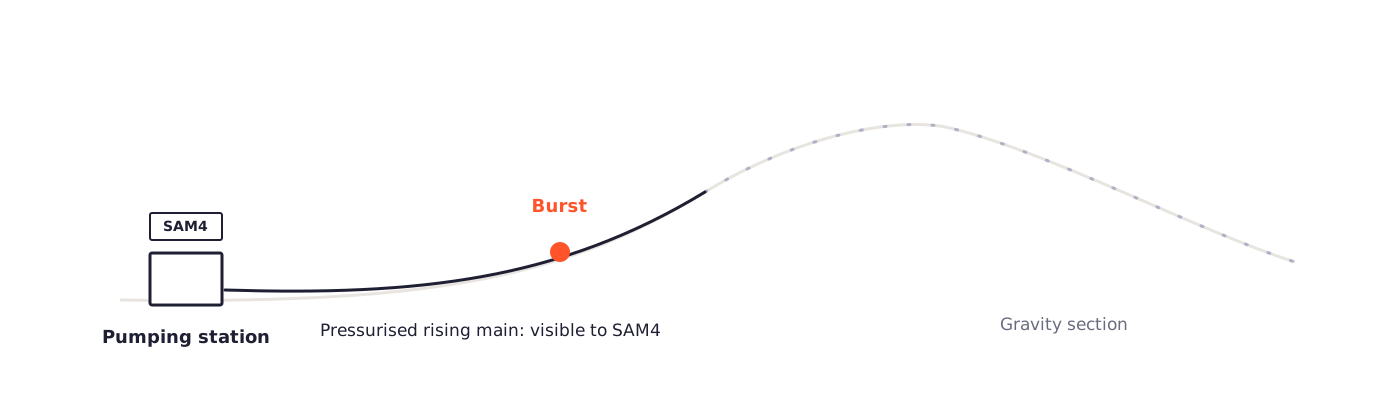
One station pressurises each main. Monitor its pumps and the pressurised section is in view. No excavation, no sensors on the pipe.
- The signal arrives in seconds. Pressure changes travel the water column at hundreds of metres per second; the pumps feel a burst almost instantly, even kilometres away.
- We sample the only machine wired into the main. SAM4 reads high-frequency electrical waveforms continuously from the motor control cabinet.
- Multiple pumps are independent witnesses. A machine fault shows in one pump; a burst shows in all of them at once. Expert review confirms before alerting.
What sets SAM4’s rising main burst detection apart
Burst rising main detection with SAM4 is the only solution that works from the pump’s electrical signature. Discover what advantages this new approach offers wastewater companies.
A new line of sight
Monitors a different signal from conventional rising-main technologies: visibility on mains that have none, and an independent second read on those that do.
No hardware on the pipe or pump
Reads the pump's electrical signature at the accessible motor control cabinet, rather than the buried rising main. Nothing goes on the pipe, even where it carries no instrumentation of its own.
Part of the platform
Adopting SAM4 gives you more than burst detection: a full condition-monitoring platform across your pumps and motors, with burst rising main detection built in as standard.
A signal you can act on
Every alert is high-confidence and checked by our condition-monitoring experts before it reaches you, and we help your team agree who owns the response, ensuring alerts drive action.
Backed by the water industry, built on real bursts
Developed using real data from the wastewater networks that helped shape it, the new burst rising mains detection capability from SAM4 builds on our track record of success in the water industry.
recall on confirmed fault events (platform-wide, not a burst-detection rate)
assets monitored across UK water
in confirmed benefits for UK water clients
“Knowing that an incident has occurred determines how serious it becomes, and rising mains have always been one of the hardest places to get that early warning. That’s why we’ve backed this work with Samotics. It turns a signal we already have from the pumps into an earlier alert on assets we’ve struggled to see into.”
Chris Perkins, Head of Pollution Performance at Southern Water
“We’ve worked closely with Samotics over the past year, following success observed across their blockage and airlock modules. We presented the team with a challenge to help us solve the problem around more accurate rising main burst detection, using an alternative to conventional measures such as pressure and flow monitoring, whilst enabling faster widescale coverage due to our scaled approach with Samotics’ SAM4 monitoring, which is already in place.”
George Cowell, Manager of Operational Intelligence at Yorkshire Water

One overnight alert. £200k+ in fines avoided.
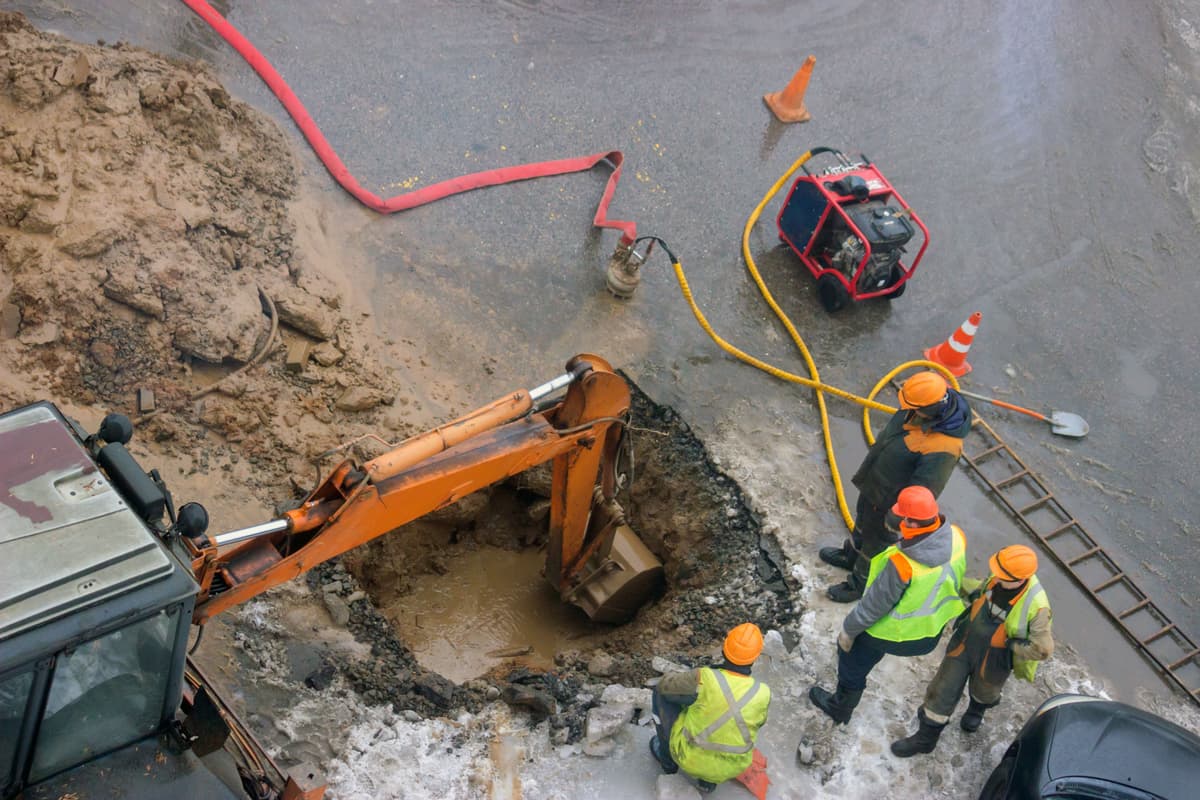
A burst rising main in Southern Water’s wastewater network, flagged by SAM4 from the pumps’ electrical signature. A fast response isolated the main within 20 hours — and the customer’s own minimum estimate put the fines avoided at £200k+, before clean-up.
Detection boundaries
What SAM4 detects
- Major bursts with a clear signature. Discharges at that scale typically change the hydraulic load on the pumps: reduced head, shorter emptying times, coordinated power shifts.
- Events on the pressurised section, where pumps and pipe form one system.
- Post-repair anomalies: pumps that return to service degraded or obstructed.
- Pump faults from the same install: clogging, ragging, and electrical faults on the assets pressurising the main.
With SAM4 monitoring
A coordinated shift raises the incident. Expert review confirms it. Your team makes the first call, dispatches the crew, and verifies the repair afterwards.
Without SAM4 monitoring
Most rising mains carry no monitoring along their length, and those are the ones a burst runs on longest. SAM4 gives that majority a line of sight for the first time, and gives the instrumented minority an independent second read.
The burst is rare. The installs delivers value continuously.
Burst rising main detection is part of standard SAM4 pumping-station monitoring: not a separate module, not an add-on, and at no extra cost. The same install, reading the same electrical signature, is also watching for the failures that occur far more frequently.
Blockages & ragging
Blockages & ragging is the most frequent pumping-station failure. SAM4 reads a clogging or ragged impeller from the current signature, before it spills or burns out a pump.
Pump & impeller faults
Bearing wear, imbalance and electrical faults on the pumps pressurising the main, caught early, from the same waveform.
Energy & efficiency
Drifting efficiency and avoidable energy cost, surfaced continuously from the electrical signal.
Post-repair checks
Confirms a repaired pump returns to service clean, not degraded or obstructed by debris left behind.
Contact our team
Install
Monitor
Coverage starts the day SAM4 powers on. No sensors on the asset, no engineering effort from your team.