
Metals & Mining
Condition monitoring for metals and mining
SAM4 monitors motor-driven equipment in smelters, steel mills and mining operations from the electrical cabinet. It can cover suitable assets exposed to heat, dust or restricted access, where sensors on the equipment are difficult to install and maintain.

Trusted by metals and mining operators



Monitoring equipment during continuous production
In metals processing, equipment is chained. One failure does not take down one machine. It takes down the process.
01 Trigger
One motor degrades
A mill drive, smelter pump, or roaster motor starts to fail. Scheduled vibration measurements are not feasible or fail to catch it. SCADA shows green.
02 Cascade
The line stops
Equipment is chained. Downstream assembly idles within hours. Production schedules collapse.
03 Emergency
Repair, not maintenance
Crews scramble. Spares get airfreighted. Energy continues to bleed on degraded assets.
$2M / hour
Industry estimate for an automotive steel mill with downstream assembly idle. Tier 1 copper mines run near $480K per hour.
Asset-mounted sensors do not easily survive
Heat, dust, vibration, and access constraints make mounted sensors a maintenance liability of their own.
Most assets run unmonitored
Vibration routes cover the biggest machines. The rest of the fleet runs critical but condition-blind.
Hidden energy waste
Up to 60% of opex. Degraded motors bleed energy for weeks before anyone sees it on the bill.
Read the signal where sensors survive: from the cabinet.
In a strip mill, the spot where a vibration sensor would go is often too hot for the sensor to survive. The motor current at the MCC carries the signature of mechanical degradation in the driven equipment.
No sensors in the harsh environment
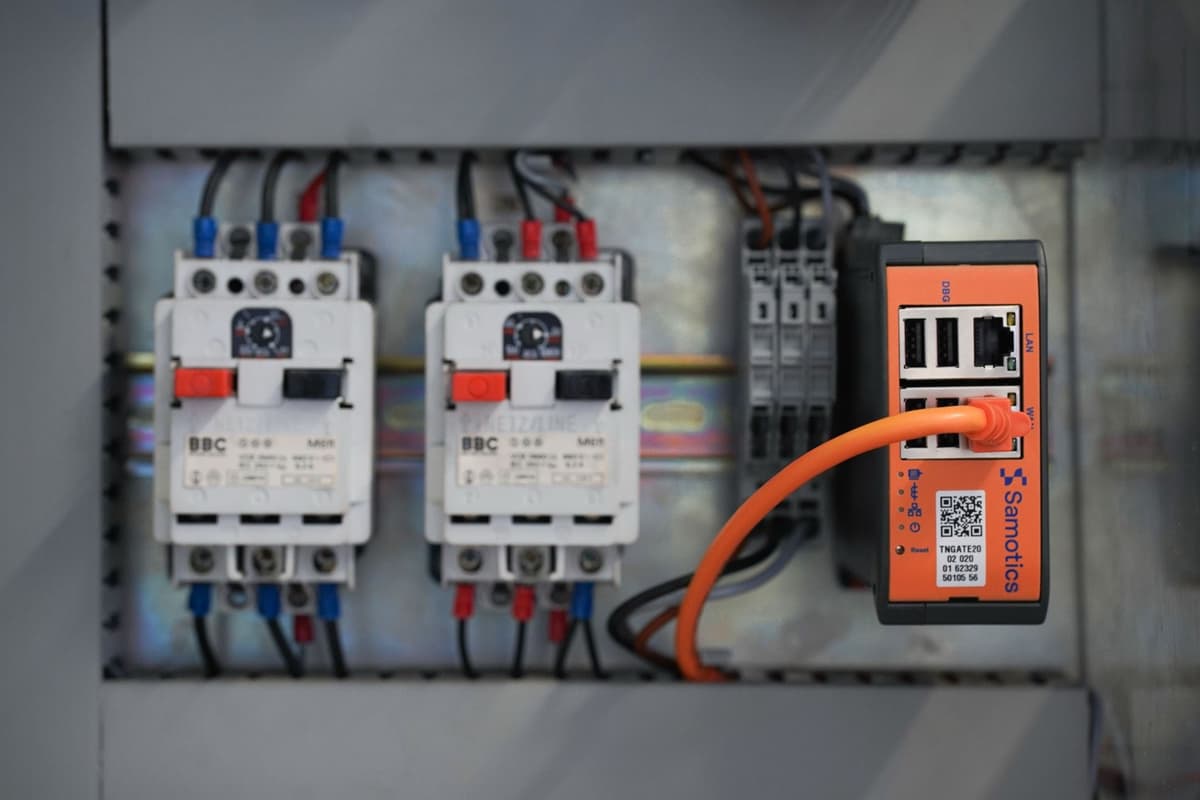
SAM4 installs at the motor control cabinet, away from ambient heat, dust, and vibration. Current transformers clip around the phase wires. No equipment on the asset, no cabling to the process floor, no sensor replacement cycle.
Extend monitoring across more of the motor-driven fleet
One technology covers pumps, fans, conveyors, gearboxes, and agitators across many AC-motor-driven configurations. Fit depends on motor type, drive topology, duty cycle, and the failure modes you need to detect. Monitor more of the fleet from the MCC room, not individual assets.
Brief MCC outage per install
Installation usually takes under 60 minutes per asset, including a brief de-energisation. No process-floor sensor installation. Site-specific electrical permits and cabinet procedures still apply. At Nyrstar Budel, the full fleet was instrumented without a plant-wide production stop.
Detects electrical and mechanical faults
ESA reads motor winding issues, supply quality and grid-level electrical faults, mechanical imbalance, belt wear, gearbox faults, and developing bearing damage. Electrical failure modes appear in the current signature directly at the source, where vibration measurement has limited reach. At Nyrstar, SAM4 detected a shaved cable on a 10kV rectifier transformer that would have caused over €1 million in equipment damage.
“Thanks to SAM4, we can monitor assets that would otherwise remain unreachable.”
Two operating environments. One way to monitor through them.
SAM4 installs once, at the MCC, and reads current and voltage at the motor supply. Each row shows what that signal reveals for the asset.
Metals
Process floor, presence of heat & dustStrip mill drives
Continuous operation in 200+°C ambient. Mounted sensors degrade in months.
The full fault library, read from a climate-controlled cabinet. No sensor replacement cycle in the heat.
Blast furnace cooling and slag pumps
Bearing housings buried behind chemical injection lines. Hard to inspect, harder to instrument.
Mechanical degradation in motor and pump, captured in the electrical signals. Spot process changes and developing failures early enough to plan the repair instead of absorbing the stop.
Roasters, mill drives, process motors
Continuous duty in dust. Mounted sensors degrade silently.
Early indications of both electrical and mechanical failures, in an environment where dust makes electrical faults more likely. No new wiring across the dust floor.
Mining
Underground or remote, high depth or long distanceDewatering pumps
Submerged at the lowest point of the operation. No diver, no confined-space entry.
Cavitation, read directly from the electrical signals. The pump stays in the sump; the surface electrics carry the signal up.
Underground ventilation fans
Remote shaft headings. Below ground, away from network coverage.
Mechanical imbalance from dust build-up, caught before it wears the bearings and shortens fan life. Data comes up the supply cable; SAM4 stays at surface.
Long overland conveyors
Drive heads spread across kilometres of pit-to-port.
Gearbox faults, read directly from the current signal. One installation per drive head. Coverage scales with cabinet count, not conveyor length.
The pattern is the same in both: the asset is hard to reach, the cabinet is easier to access, and SAM4 reads the electrical evidence from there.
The equipment that keeps your plant running
SAM4 monitors any AC motor-driven rotating equipment from the motor control cabinet. In metals and mining, these are the asset types where unplanned failure costs most. See all monitored assets

Pumps
Centrifugal pumps in water, chemicals, oil & gas, and process industries.

Fans & blowers
Ventilation fans, cooling fans, process blowers, and aerators.

Conveyors
Belt conveyors, screw conveyors, and chain drives.

Transmissions
Belt drives and coupling systems between motor and driven asset.
MV motors
Medium and high voltage motors in critical processes.
Not every asset is a SAM4 asset.
Strongest fit
AC motor-driven assets like the pumps, fans, mill drives, and conveyors above. Assets that run often, for stretches longer than 20 seconds, with a reasonably stable load.
Needs engineering review
Non-standard motor configurations, complex drive topologies, unstable loads, or unusual duty cycles. We flag these in asset-fit review.
Some assets are properly monitored by vibration on already-instrumented critical equipment, process instrumentation, OEM monitoring, or inspection. For many critical assets, SAM4 is a complementary layer: it expands failure mode coverage, adds insight into operational performance, and supports root cause failure analysis. Asset-fit review tells you which is which before you commit.
Detections in smelters and steel mills
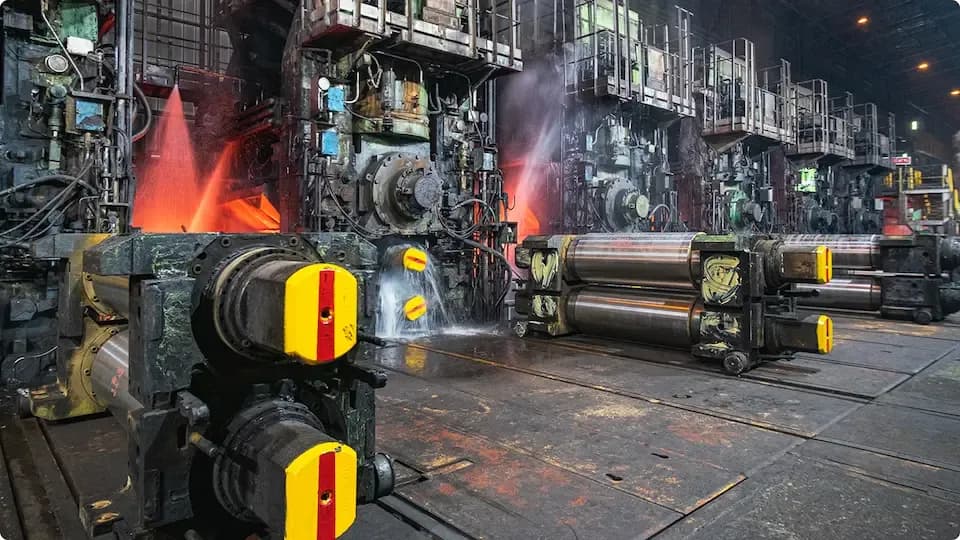
How ArcelorMittal prevented 31 hours of downtime by detecting 27 failures ahead of time
SAM4 detected each fault far enough ahead that the repair could be scheduled into planned maintenance, rather than stopping production without warning.

How zinc smelter Nyrstar got 800% ROI in 11 months
Continuous monitoring on the smelter's critical drivetrains caught faults early, including a 10 kV rectifier cable fault that would have caused over €1 million in equipment damage.
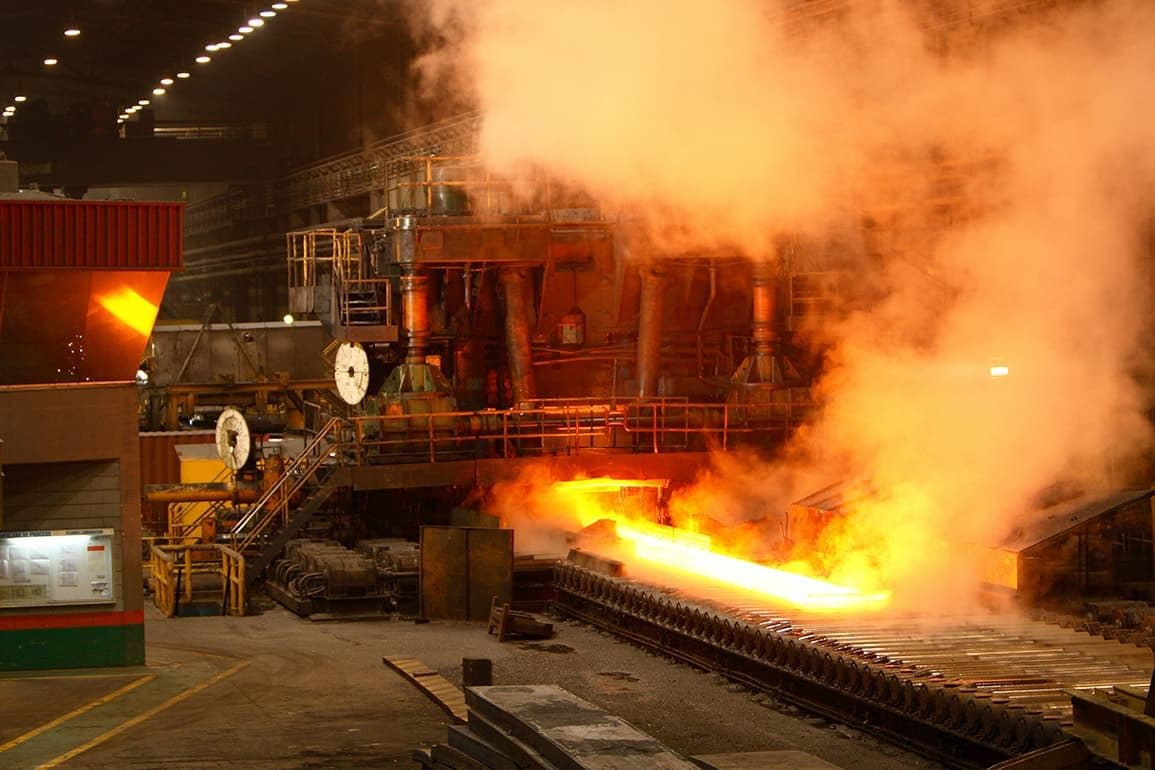
9x common faults detected in steel manufacturing
Nine detections drawn from anonymised SAM4 data across steel plants, each shown with the signal that triggered it so engineers can judge the evidence.
Show more (6)Show fewer
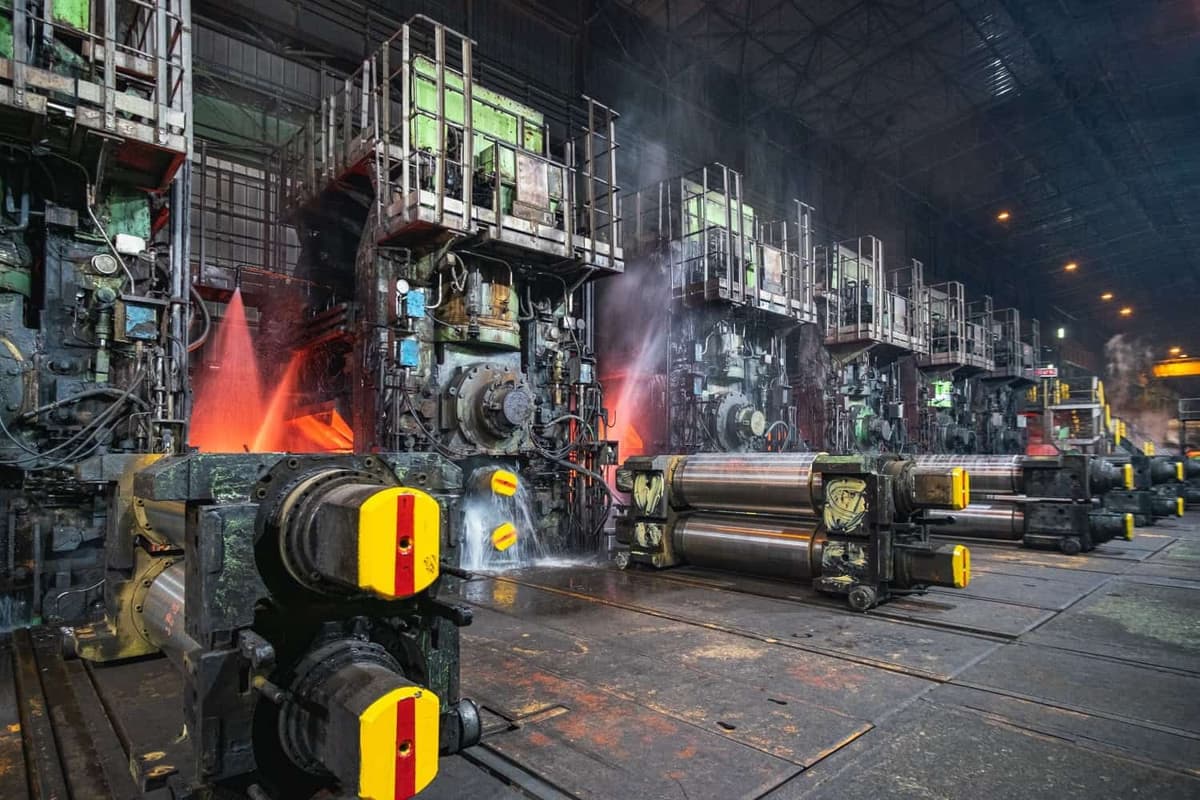
Loose cardan joint caught the same day SAM4 was installed
Read how SAM4 caught a loose cardan shaft coupling within hours of installation on this long-term steel customer's runout table roll.
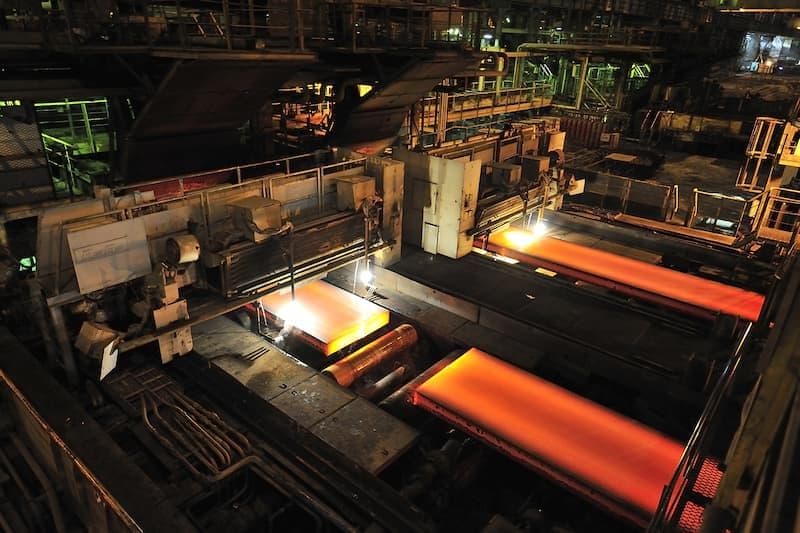
Early warning on failing cardan shaft coupling in runout table roller
Read how SAM4 caught a failing cardan shaft coupling in a runout table roll for this steel manufacturer.
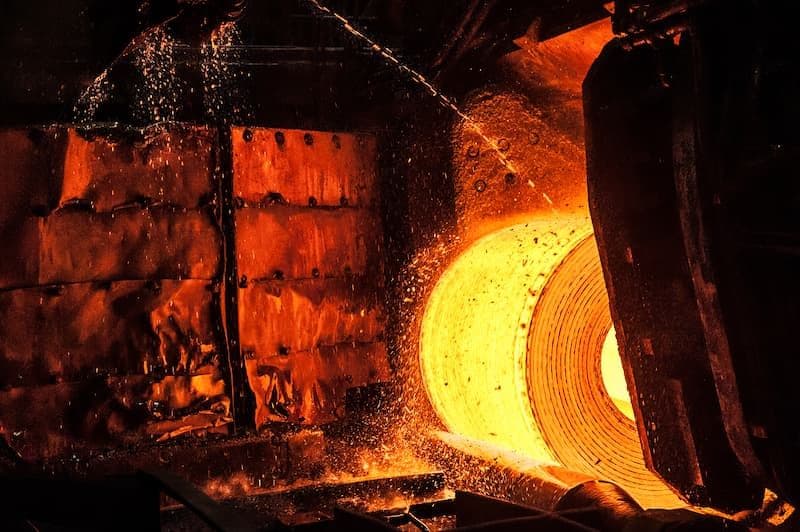
Bearing failure avoided in motor driving critical runout table roll
Read how SAM4 caught motor bearing failure in a runout table roll 7 months in advance for this steel manufacturer.
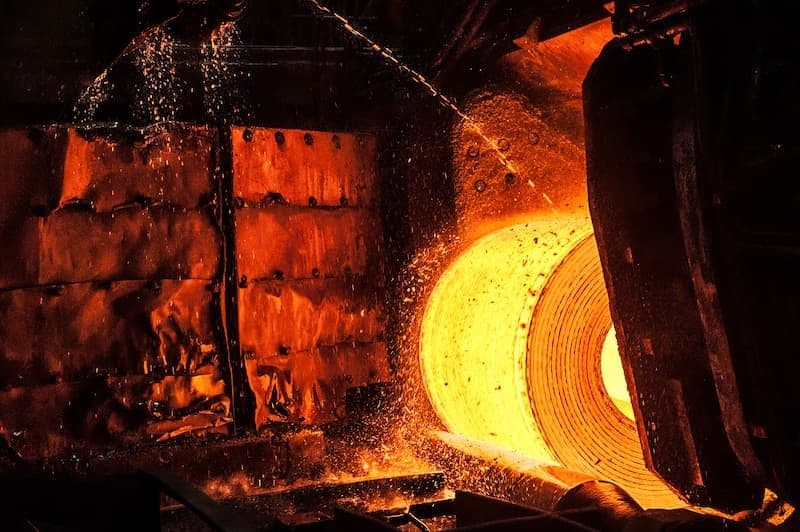
Condition monitoring for shot blasting machines: a case study
Read how SAM4 caught a loose blast wheel belt guard before it caused damage to this steel manufacturer's shot blasting machine.

Early warning of failing heated godet roll prevents $90k in production loss
SAM4 picked up motor overloading on the godet roll early enough for maintenance to be planned, before the fault could stop the production line.
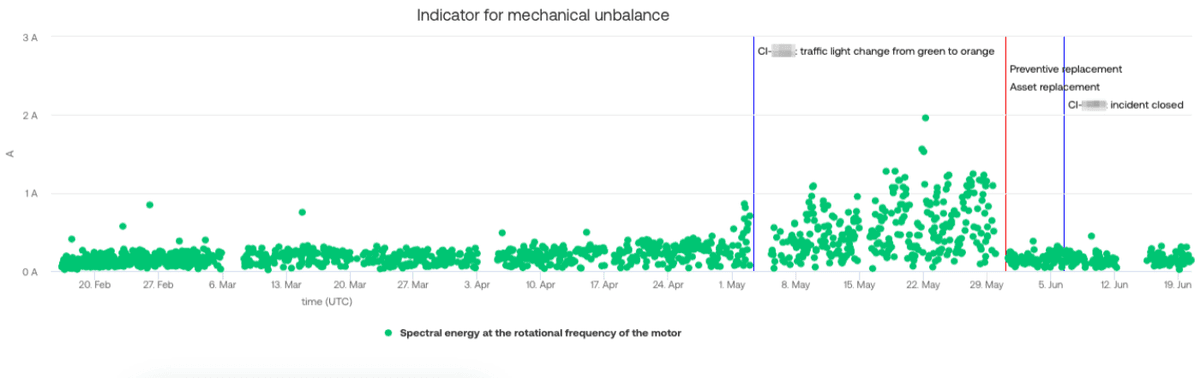
16x early alerts to degrading rollers save €650k in lost production
Roller conveyor faults were caught well before failure, letting the mill book each repair into scheduled downtime instead of losing production.
From email alert to planned repair
Detection is only useful if it changes what your team does next. Here is how reliability teams at smelters and steel mills use SAM4 to stop firefighting.
Alert
Email lands with fault classification
Asset name, fault type, severity, recommended action. The reliability engineer sees what is wrong before walking to the floor.
Validate
Engineer reviews and decides
The engineer checks SAM4 trend data and decides whether to act now or schedule for the next planned shutdown. No more opening up equipment to confirm a hunch.
Plan
Planned repair, not emergency callout
Parts are ordered. The crew is scheduled. The repair happens during a planned window. No weekend callouts. No overtime premiums. No cascade.
Improve
Feedback loop sharpens detection
Maintenance outcome gets recorded and fed back to Samotics. The model trains on your assets, your operating conditions. Detection performance improves with every closed work order.
At Nyrstar, that shift from reactive to planned maintenance drove 800% ROI in 11 months.
“The invisible pain points become visible.”
Patrick Emmers
Nyrstar
No sensors on the process floor
Clip on at the MCC
Current transformers clip around the phase wires inside the motor control cabinet. Brief MCC outage; under 60 minutes per motor in typical configurations. Site-specific electrical permits and cabinet procedures still apply.
Connect via cellular or Ethernet
Data transmits over 4G/5G or local network. Cellular deployments can avoid firewall and VPN changes. Store-and-forward buffering handles connectivity gaps in underground or remote areas. SAM4 is monitoring-only and does not send control commands.
Monitor from anywhere
The SAM4 dashboard shows asset health, fault alerts, and energy performance across the fleet. Alerts route to email, your CMMS, or your control room. Works alongside existing vibration programs.
The questions metals engineers actually ask
So was Nyrstar's team. They received an alert, did not believe it, and opened the casing anyway. The fault was exactly what SAM4 predicted. That single event changed the culture. We recommend starting with a small fleet of critical assets. Let the system prove itself with real detections on your equipment, in your environment. Scepticism disappears when the maintenance team sees it work.
Yes. SAM4 is highly compatible with variable frequency drives. VFDs are increasingly common in metals and mining for energy savings and process control. SAM4 monitors VFD-driven motors from the MCC using the same clip-on installation. The analysis accounts for variable speed operation.
SAM4 hardware sits in the MCC room, not on the process floor. The motor control cabinet is climate-controlled or at least protected from the worst of the heat and dust. No sensor needs to survive process-floor heat or metallic dust exposure. The measurement happens at the electrical supply, not the mechanical asset.
No. SAM4 complements vibration, it does not replace it. On assets where vibration sensors are already installed and working, ESA adds electrical fault detection and energy data that vibration cannot see. On the rest of your fleet, the assets that are too hot, too remote, or too low-priority for vibration, SAM4 is the primary condition monitoring source. ArcelorMittal described it as a good alternative to vibration measurements for hard-to-reach assets.
None. SAM4 builds its own baseline from live electrical measurements starting at installation. Within weeks, it has enough data to detect anomalies. Nyrstar had their first detection within the initial deployment period. No historical data export or SCADA integration is required to begin.
Yes, if the motor is powered from a surface or accessible MCC. Underground ventilation fans and dewatering pumps are powered from motor control cabinets that are often at the surface or in accessible electrical rooms. SAM4 installs there. The asset can be 500 metres underground. As long as the motor current is measurable at the MCC, the asset is monitorable.
Nyrstar achieved 800% ROI in 11 months. At $480,000 per hour of unplanned downtime in a Tier 1 copper mine, a single avoided production stop can pay for a multi-year deployment. The payback depends on your downtime cost, fleet size, and current failure rate. We provide a plant assessment that models the expected return for your specific operation.
SAM4 is monitoring-only. It reads electrical signals passively. It has no connection to control systems and cannot send commands to any asset. Data transmits over cellular or a dedicated network, completely separate from the operational network. No IT/OT convergence is required.
Discuss monitoring for your plant
Start with high-consequence conveyors, fans, pumps, roasters, mills, and auxiliary drives where access, heat, dust, or distance limits current monitoring coverage.