
Pump condition monitoring
Sensorless pump monitoring
SAM4 monitors pumps through electrical measurements at the motor control cabinet. Your team can investigate developing faults without mounting sensors on submerged or hard-to-reach pumps.
Measurement at the cabinet

Suitable faults must produce a measurable change in the electrical signal.
What does sensorless pump monitoring mean?
Sensorless pump monitoring means monitoring without sensors mounted on the pump. SAM4 still uses measurement hardware, installed at the motor control cabinet.
SAM4 uses current and voltage sensors installed at the motor control cabinet. It analyses the motor's electrical signals to find patterns associated with changes in the motor and the pump it drives. This method is called electrical signature analysis, or ESA.
The cabinet is accessible while the pump may be below the surface. After installation, teams can collect condition data during operation without lifting the pump for each reading. SAM4 does not require a vibration sensor to be attached to the pump casing.
From cabinet measurements to a maintenance decision
- Measure at the cabinet. SAM4 hardware captures current and voltage from the motor's electrical supply.
- Analyse the signals. Changes in the driven load and developing faults can leave patterns in those measurements. SAM4 analyses these patterns in the context of the asset's operating behaviour.
- Investigate and act. Findings help the maintenance team decide what to check, which asset needs attention and how to plan the work.
A change in a signal is evidence to investigate. It does not, by itself, establish a fault or its root cause. Operating conditions, asset history and inspection findings help explain what has changed.
Explore the SAM4 platform for more detail on how monitoring findings reach maintenance teams.
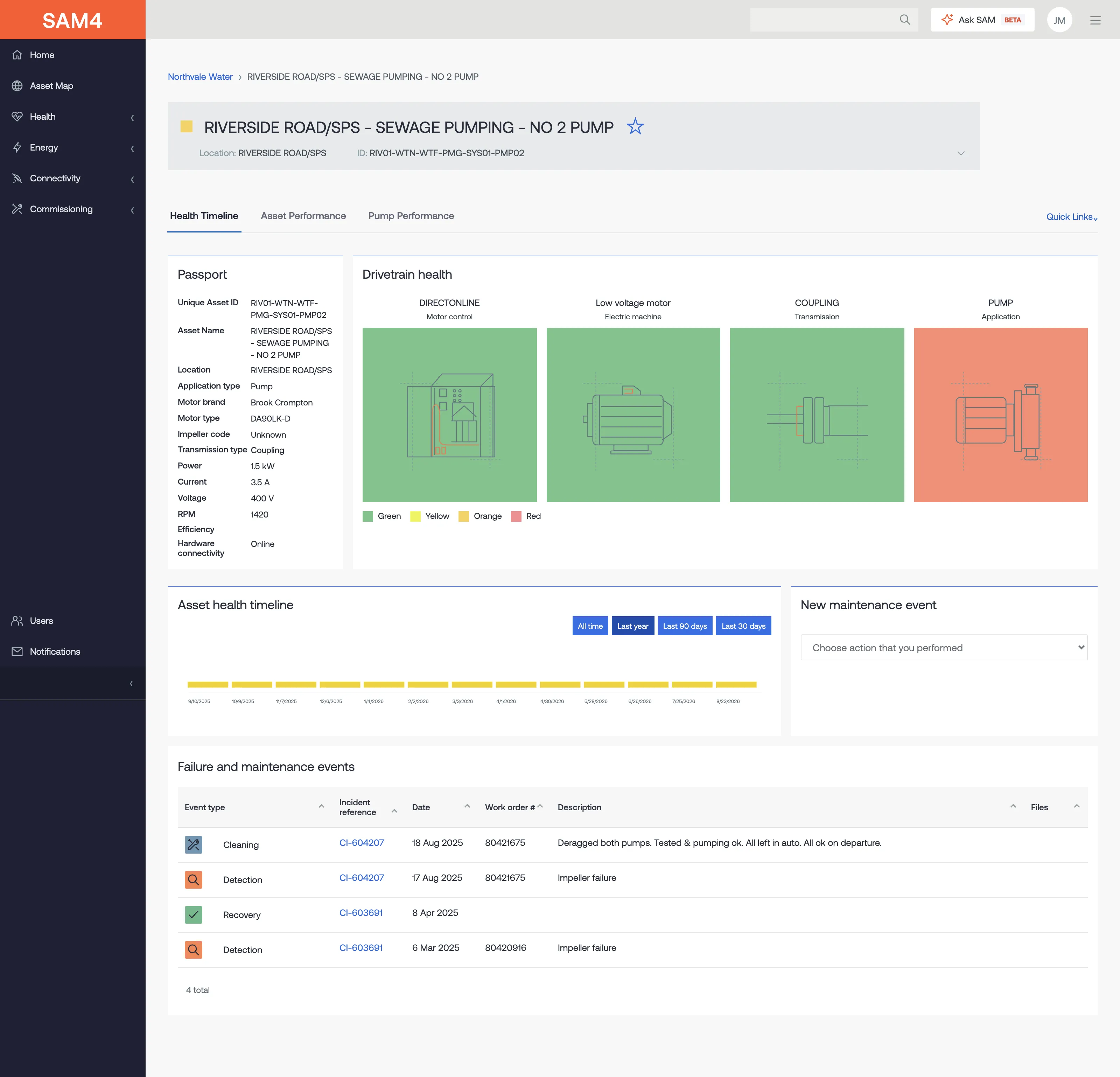
Put the pump finding in context. Review drivetrain health, the condition timeline and recorded maintenance events before deciding what to inspect. Names and work-order references in this example are fictional.
See supporting trends and maintenance feedback
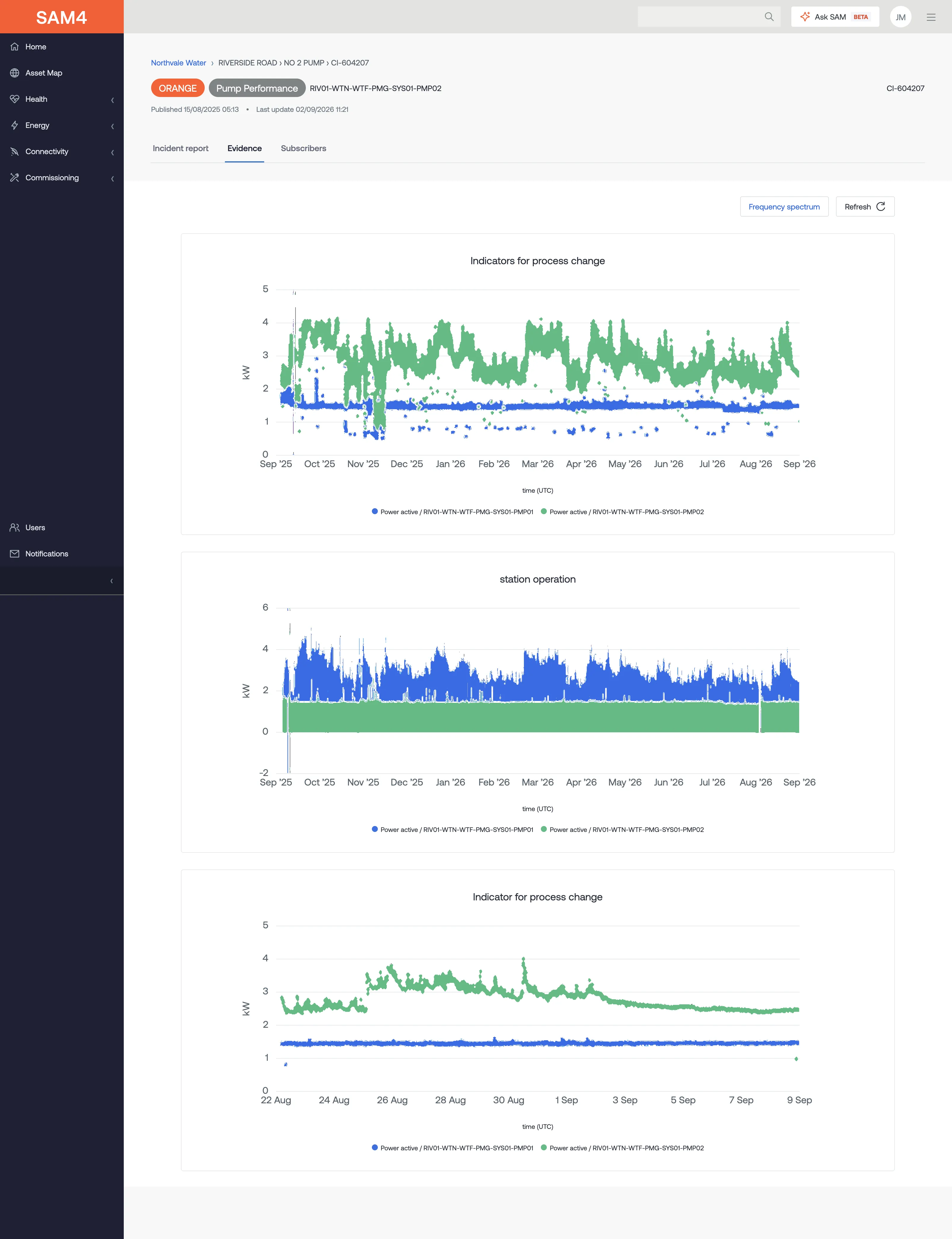
Examine the supporting measurements. Check how measurements changed over time and use the incident discussion to decide what needs investigation.
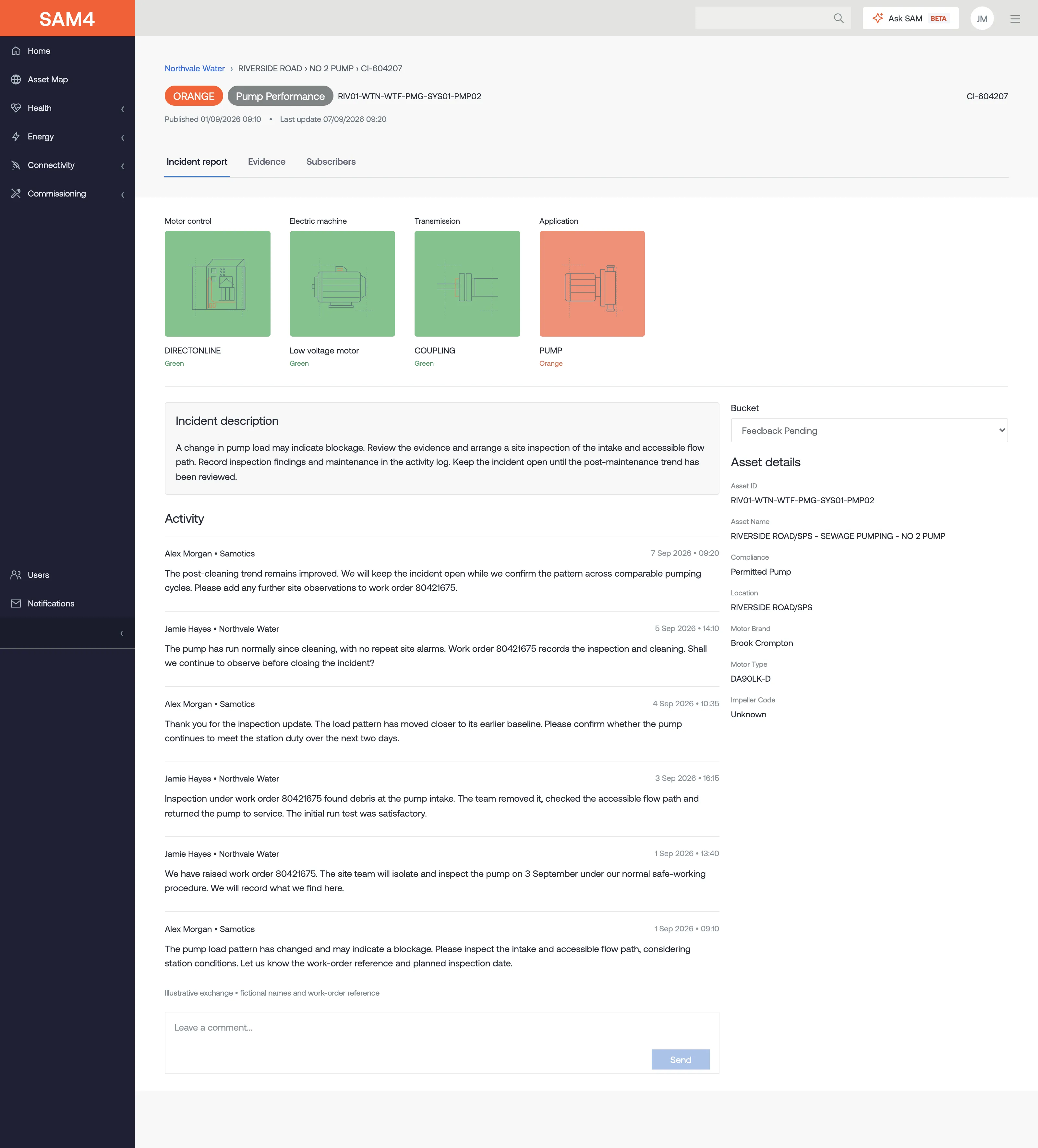
Keep the site response with the finding. Follow the incident description and activity log through inspection and maintenance feedback. The example uses fictional identifiers.
Why this approach suits submerged sewage pumps
A submerged sewage pump is difficult to inspect while it is working. Access may involve lifting the pump from a wet well. Across a dispersed network of sewage pumping stations, those visits also take travel and maintenance time.
Cabinet-based monitoring gives teams another source of condition data between visits. It can support decisions about ragging, blockage and other changes that affect pumping, while the measurement hardware remains outside the wet well.
The same equipment is often described as a submersible sewage pump. In US wastewater networks, the station may be called a lift station. The practical question is the same: how can a team assess the pump when access to it is difficult?
See submerged sewage pump monitoring with SAM4 for the application, or explore monitoring across water and wastewater operations.
What can it detect, and where are the limits?
Electrical measurements can carry information about electrical faults, mechanical changes and changes in pump load. SAM4 applies this information to pump monitoring, including the detection of developing blockage patterns.
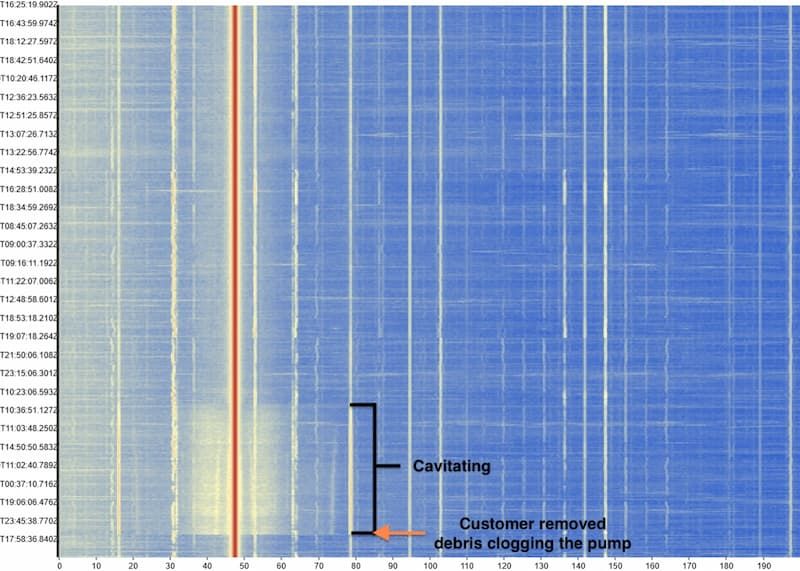
A blocked intake leaves a signal
In this published wastewater case, SAM4 detected a rise in electrical signal intensity around the supply frequency. The customer found debris obstructing the pump intake.
Time runs from top to bottom in the chart. The bracket marks the period of cavitation. At the orange arrow, the customer removed the debris and normal operation returned.
Coverage depends on the pump, motor, drive arrangement, operating conditions and fault. A fault has to influence the measured signals in a way the analysis can distinguish from normal behaviour. There is no universal detection promise for every pump component or every stage of damage.
Choose monitoring around the failure modes that matter at your site. Retain the inspections, protection systems and other measurements needed for risks outside that coverage. Where vibration, temperature or process measurements are available, they can provide additional evidence.
Read the guide to remote condition monitoring for submersible pumps for a closer look at the strengths and limits of different approaches.
Condition monitoring, performance monitoring and control
Condition monitoring asks whether the equipment is changing
It looks for evidence of developing problems so a maintenance team can investigate and respond. That is the focus of SAM4's asset health monitoring.
Performance monitoring asks how the pump is operating
For suitable applications, electrical data and pump reference information can be used to estimate the operating point and assess inefficient operation. An estimated flow or head value is different from a direct measurement by a flow meter or pressure sensor. Read how SAM4 uses pump curves and explore pump energy optimisation.
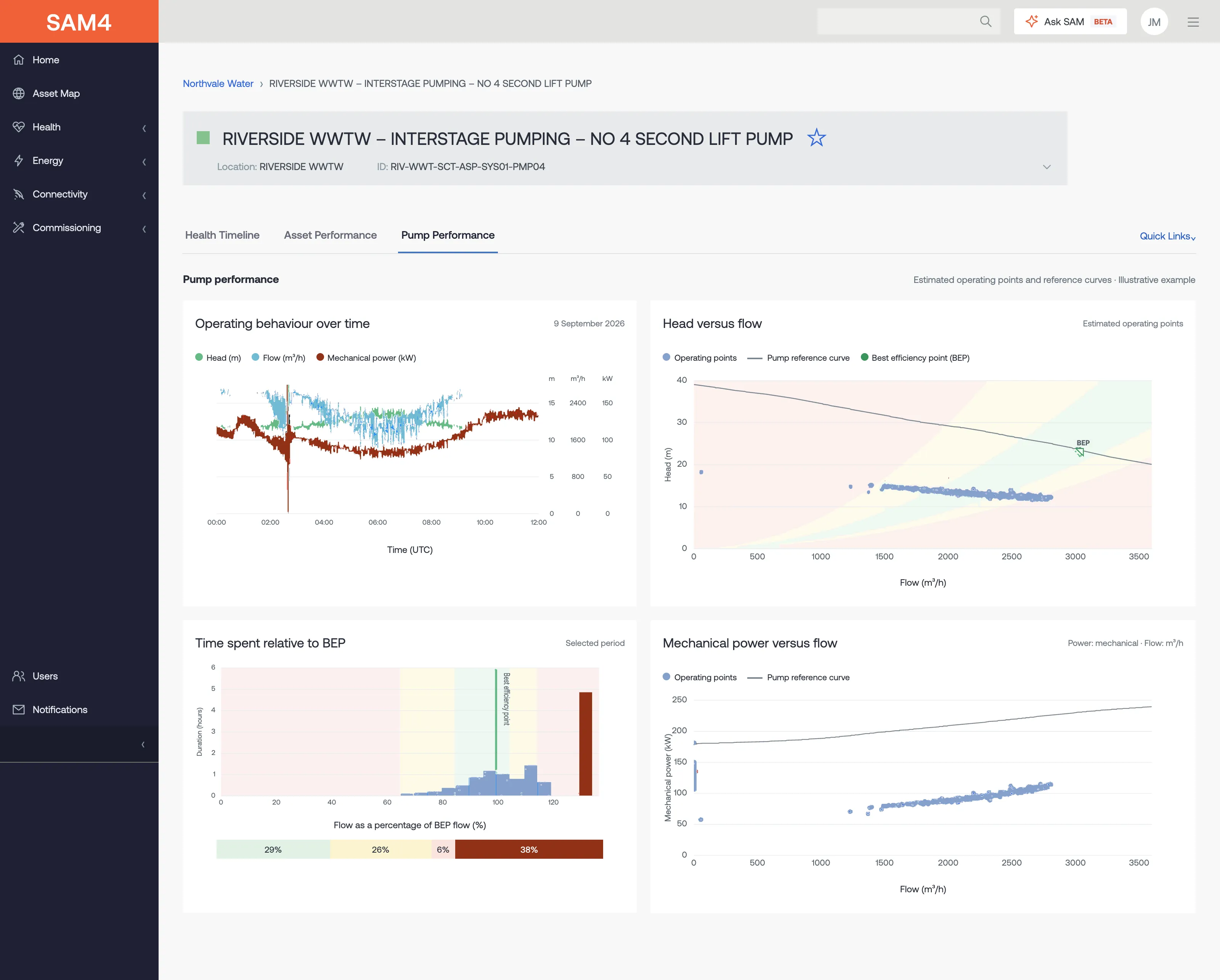
Example SAM4 pump-performance view. The blue points show estimated operating points against the pump reference curve. The BEP marker identifies the best efficiency point.
Open the full-size screenshot · Read how the pump curve is calculated
Locate the operating pointsCompare the blue cluster with the reference curve and the BEP marker.
Check the operating patternThe time plots show changes in estimated head, flow and mechanical power during the selected period.
Investigate the differenceUse the operating pattern alongside site conditions and maintenance findings. Distance from BEP alone does not establish a fault.
Sensorless control adjusts how the pump runs
In drive-control terminology, “sensorless” can describe a method that estimates variables for control without a dedicated sensor for each variable. A drive offering sensorless control does not automatically provide the same fault analysis as a condition monitoring system. Check which measurements, functions and outputs are actually included.
What does installation require?
SAM4 needs access to the relevant motor circuits in the cabinet, space for its hardware and a suitable route for data communication. A site assessment establishes the right arrangement for the motor, drive and cabinet.
The electrical installation must be planned with qualified personnel and the required isolation. Once installed and commissioned, monitoring uses the electrical measurements collected while the asset operates.
A useful first discussion covers the pump and motor types, drive configuration, operating pattern, known failure modes and how your team currently responds to faults. Those details help establish suitability and define what a deployment should demonstrate.
See how SAM4 is installed for the installation approach.
Follow the evidence from an alert to inspection
The SAM4 pump blockage explainer follows a documented example involving two pumps at a sewage pumping station. It shows how the blockage indications developed, how the station context affected alert priority and what the maintenance team found when the pumps were lifted.
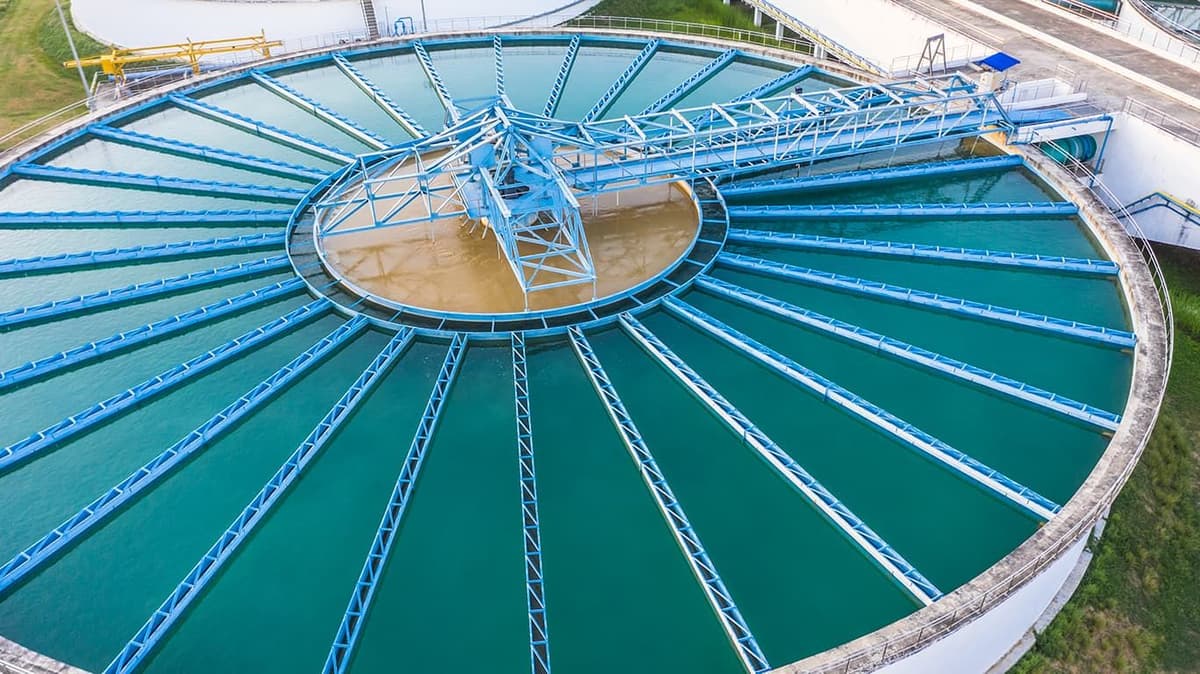
Wastewater pump clogging
An electrical signature change led to an intake inspection. The customer removed debris and normal operation returned.
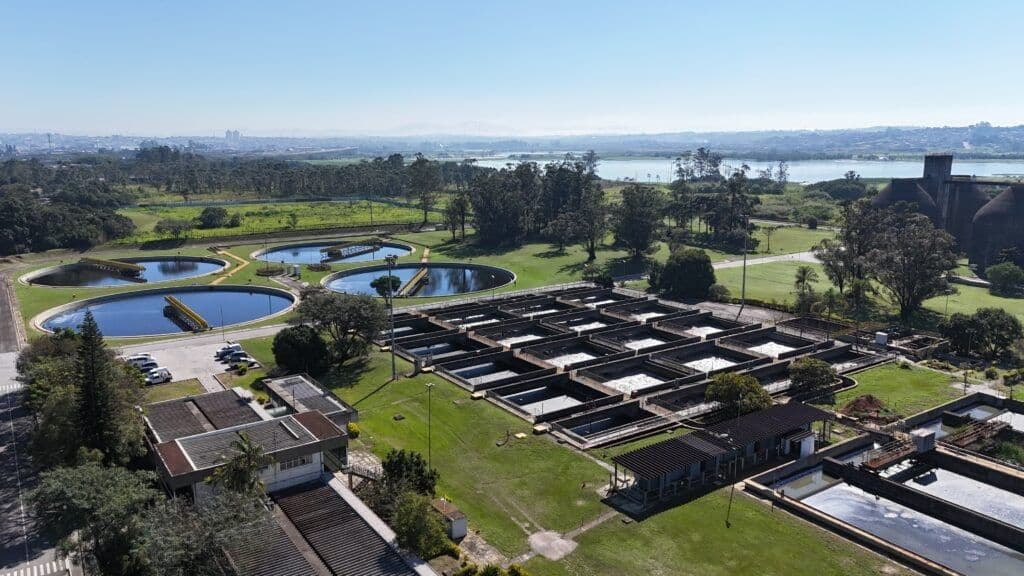
Sabesp: comparing pump combinations
Electrical measurements combined with existing flow and head telemetry helped identify more efficient pump combinations.

Vitens: changing pump operation
Operating-point data showed when smaller pumps could meet demand. Vitens used the findings to change its pumping strategy.
Use these examples to assess relevance to your own pumps. Check the asset configuration, observed fault, confirmation method and maintenance response. Results from an individual site do not establish the same outcome for every installation.
Check whether SAM4 suits your pumps
Bring the pump types, motor and drive details, and the faults you want to address. We can assess where cabinet-based monitoring would be useful.