

Compressor monitoring
Compressor monitoring is type-specific. Here's what fits today.
Screw, reciprocating, centrifugal: same MCC, different physics, different fit.
Compressors are heterogeneous. Screw compressors couple drivetrain faults to motor current and have growing case-led evidence. Reciprocating compressors share favorable physics with cohort building. Centrifugal compressors produce smooth aerodynamic loading that does not reach ESA cleanly, so vibration remains primary. This page is honest about which sub-types fit and which do not.
Compressors are harder to monitor than pumps or fans
Six distinct compressor types operate in your fleet. Reciprocating, screw, centrifugal, axial, lobe, and scroll machines fail differently and require different monitoring methods. Pulsating loads, variable capacity controls, belt drives, gearboxes, and ATEX (explosive atmosphere) locations create layers of complexity. A single external sensor cannot see the same failure modes on all of them.
of compressor failures originate in components invisible to external electrical monitoring: internal valves, screw elements, oil systems, seals.
distinct compressor types in a typical industrial fleet. Each has different failure physics, different torque profiles, and different monitoring requirements.
of reciprocating compressor shutdowns are valve-related. This is the single largest failure mode across the compressor landscape.
Not all compressors are created equal
ESA detects faults that modulate motor torque. Reciprocating compressors create strong torque pulsations. Excellent ESA visibility. Centrifugal compressors produce smooth continuous torque. Poor ESA visibility for mechanical faults. The right monitoring approach depends on which compressor type you're protecting.
Supported today: screw compressors
Moderate torque pulsation from lobe meshing. Bearing detection and motor health work reliably. But lobe wear, seal degradation, and oil system faults are invisible to ESA. Fleet screening from the motor control cabinet (MCC) is the strongest value case.
Physics potential, roadmap: reciprocating, Roots, valve faults
High torque pulsation from discrete compression strokes and lobe engagements. Valve faults, bearing defects, and liquid slugging produce distinct current signatures. Published peer-reviewed evidence supports detection. Direct coupling and solid drivetrain connections maximize signal fidelity.
Limited ESA candidates: centrifugal compressors
Smooth aerodynamic torque. Most mechanical faults (blade erosion, bearing wear, seal degradation) produce no torque modulation. ESA covers motor health and surge detection only. Vibration monitoring (API 670) is primary and mandatory.
Hard boundaries
Fluid couplings block all downstream signal. Belt drives severely attenuate. Variable-frequency drives (VFDs) with slip compensation eliminate rotor bar detection below 50% load. Below ~3 kW, signal-to-noise is too poor.
Representative SAM4 dashboard view. The cabinet read produces fault classifications with evidence levels and recommended actions. On compressors, the same workflow runs against torque signatures from the screw rotors and drivetrain, with fit varying by sub-type.
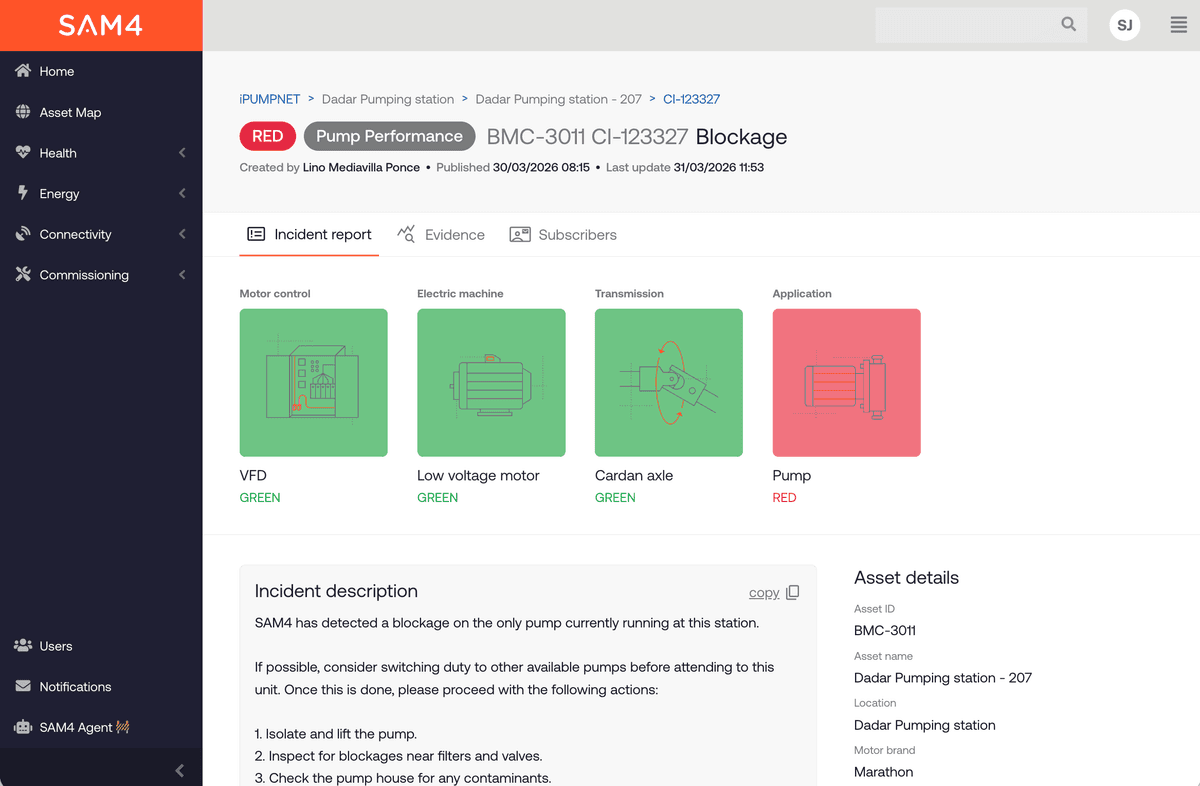
Signal flagged
Expert review
Fault classified
Action recommended
What SAM4 detects on this asset, and where it doesn't fit
One table. Each fault class appears once with its signal path, the strength of field evidence on this asset class, and the recommended use of SAM4. Compressor fit varies sharply by sub-type: screw and reciprocating compressors couple drivetrain faults to motor current cleanly; centrifugal compressors produce smooth aerodynamic loading that does not reach ESA reliably and are not a primary SAM4 detection class on this page.
| Fault class | Signal path | Field evidence on this asset | Use SAM4 as |
|---|---|---|---|
| Phase loss and voltage imbalance | Direct / electrical. Resolved at the cabinet from current and voltage symmetry. | Pathway established across motor-driven assets. | Primary monitoring |
| Process-induced load deviation | Load signature. Pressure ratio, suction conditions, and capacity-control changes reach the current as torque change. | Pathway established. Strong on screw and reciprocating compressors. | Primary monitoring |
| Mechanical unbalance | Load signature + 1x running speed. Reaches motor current through the rotor. | Pathway established across pump and compressor cohorts. | Primary monitoring |
| Belt degradation | Transmission path + belt-pass frequency. Sub-synchronous belt-pass passes cleanly through motor inertia. | Pathway established on belt-driven compressor packages. | Conditional |
| Coupling-related load anomaly | Load signature + 1x. | Small sample reviewed. No misses observed. | Conditional |
| Shaft or coupling misalignment | Load signature + 2x. | Small sample reviewed. Vibration phase analysis discriminates root cause. | Conditional |
| Valve leakage on reciprocating compressors | Load-step pattern across the cycle. Visible as cycle-to-cycle deviation in the current signature. | Pathway established. Reciprocating cohort building. | Conditional |
| Inlet filter or suction blockage | Long-window load signature drift. | Pathway established. Detected via motor electrical signature shift. | Conditional |
| Stator winding short indicators | Direct / electrical. | Pathway established across asset classes. Compressor-specific cohort still building. | Conditional |
| Rotor bar degradation | Indirect electromagnetic. | Pathway established across asset classes. Compressor-specific cohort still building. | Conditional |
| Soft foot indicators | Distinctive base-mounting signature in the current. | Small sample reviewed. | Conditional |
| Bearing degradation | Indirect electromagnetic + load. Visible once degradation reaches the motor current. | Stable runtime helps; intermittent duty thins the signal. Vibration on accessible critical compressors remains the better tool for raceway-level diagnosis. | Late-stage detection |
Outside the envelope: Centrifugal compressor mechanical faults: Use vibration. ESA does not lead on centrifugal compressors. Valve plate damage and internal seal wear on reciprocating: Use cylinder pressure analysis or piston-rod drop monitoring. Lubrication oil condition: Use oil analysis on a sampling cadence. Internal gas leak detection: Use process flow, pressure, or gas-detection instrumentation.
What ESA covers. What vibration covers. Where they overlap.
Compressors are where monitoring architecture matters most. For compressors, vibration analysis is structurally superior for mechanical fault detection. ESA adds motor and drive health. A blind spot for vibration. And fleet screening economics.
ESA leads
- Broken rotor bars, stator winding faults, eccentricity
- Power quality and VFD health
- Energy consumption and efficiency trending
- Load pattern anomalies and duty cycling
- Fleet-wide screening from the MCC
- Monitoring in ATEX/hazardous zones without field sensors
Both contribute
- Coupling misalignment (ESA: torque modulation. Vibration: 2x radial)
- Gearbox faults (ESA: current as torque image. Vibration: mesh analysis)
- Reciprocating valve faults (ESA: load profile. Vibration: crosshead accel)
- Belt wear and looseness
- Surge events on centrifugal compressors
Vibration leads
- Motor and compressor bearing defects (envelope analysis, proximity probes)
- Rotor unbalance on centrifugal compressors (radial force, no torque signal)
- Subsynchronous instability and shaft bow
- Seal degradation
- Crosshead and wrist pin wear (reciprocating)
- Internal rub, impeller cracking
Detection capability by compressor type
| Compressor type | ESA compressor-side | Vibration compressor-side | Recommended stack |
|---|---|---|---|
| Reciprocating | Good: Valve faults, imbalance, liquid slugging | Excellent: Crosshead, packing, bearing wear | ESA + Vibration |
| Screw | Good: Motor health, bearing detection, fleet screening | Excellent: Lobe wear, seal degradation, element defects | ESA + Vibration |
| Centrifugal | Limited: Motor health, surge detection only | Mandatory: Blade erosion, bearing wear, imbalance | Vibration + ESA (secondary) |
| Axial | Limited: Motor health only | Mandatory: Blade, bearing, thrust defects | Vibration + ESA (secondary) |
| Lobe / Roots | Good-Excellent: Bearing defects, pulsation anomalies | Excellent: Lobe wear, timing gear faults | ESA + Vibration |
| Scroll | Poor: Below signal threshold on small motors | Good: Bearing, scroll wear, gas leakage | Vibration + Process monitoring |
Under 60 minutes. No compressor access required.
1. Open the motor control cabinet
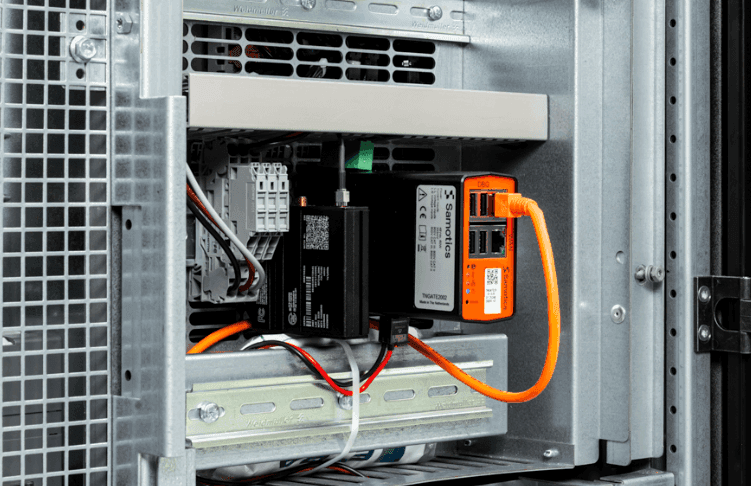
SAM4 installs at the MCC, the same panel your electricians already access. No compressor package access. No work near the rotating equipment. ATEX-certified gateway variants are available for hazardous-zone installations.
2. Clip sensors onto motor supply cables
Current and voltage sensors clip directly onto existing motor cabling. Installation requires a brief motor de-energisation while sensors are fitted, typically scheduled with operations. Works with DOL starters, soft starters, and VFD-driven compressors.
3. Connect and commission
The SAM4 gateway connects via cellular (4G/LTE). No dependency on site IT or SCADA networks. Monitoring starts immediately. First diagnostic results within 48 hours.
Related assets
Pumps
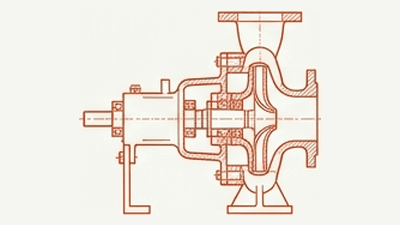
Centrifugal pumps in water, chemicals, oil & gas, and process industries.
LV motors
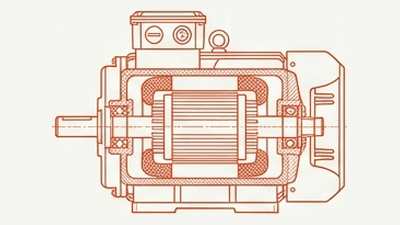
Low voltage motors across all industrial applications.
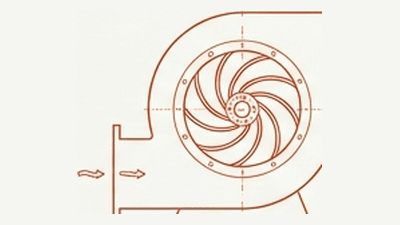
Fans & blowers
Ventilation fans, cooling fans, process blowers, and aerators.
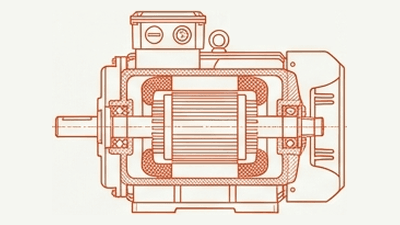
MV motors
Medium and high voltage motors in critical processes.
Understand which compressors benefit from ESA
Not all compressors are equal ESA candidates. Talk to an engineer about your specific fleet: compressor types, drive arrangements, and coupling configurations. We'll map where ESA adds value and where you need additional monitoring.
How this page is validated
Field validation on compressors is in progress and concentrated in screw architectures. Per our reporting rules, samples below 50 confirmed cases are reported case by case rather than as a single headline figure. The cards below describe how the evidence base grows and what evidence is available today.
How the compressor evidence base grows
- Each alert SAM4 raises on a compressor is followed up against customer-confirmed outcomes
- Cases are scored independently: detected, missed, or false alert
- Sub-types are tracked separately: screw, reciprocating, centrifugal, lobe
- Pathways resolved on comparable rotary positive-displacement machines inform initial scoping
- Field evidence on this asset moves from a clear signal path to case-by-case proof to a published metric as the evidence base grows
What evidence is available today
- 12-month review window: 8 scored cases across all compressor sub-types, 0 false alerts
- Screw compressors: small reviewed sample with documented detections, misses, and evidence reported case by case
- Reciprocating compressors: clear signal path; no field sample yet, evidence still building
- Centrifugal compressors: physics is hostile to ESA for mechanical faults; vibration is primary
- Per-case detail, scoring rules, and review criteria available to qualified technical evaluators